Chardonnay Oenology History

2011
(Bin 107)


Introduction to the Style

Relative to the rest of the world, the Hunter Valley of Australia yields fairly ripe Chardonnay. As a generalisation, the Hunter's climate tends to produce Chardonnay with more gently sub-tropical flavours (like melon or peach) than those of other regions (such as Burgundy's pear and apple).

Chardonnay winemakers in the region traditionally made relatively big wines, with full malolactic-induced flavours, low acidity, and strong oak-derived flavours.

Over the last ten years or so, the typical style of Australian Chardonnay has undergone significant changes: Chardonnay wines tend to be made in a leaner style, with higher acidity, and perhaps slightly less oak influence than the historical norm. In the Hunter Valley, this has translated into the frequent blocking of malolactic fermentation to retain acidity, slightly reduced oak usage and reduced lees-derived flavours.

Terroir

Site Details

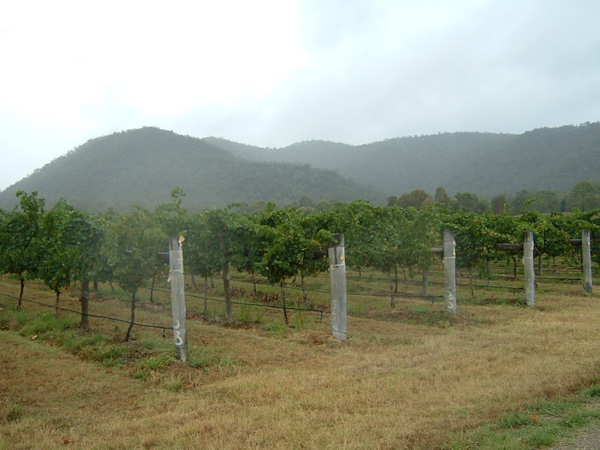
The particular vineyard from which this wine's fruit was sourced lies within the Broke-Fordwich subregion of the Hunter Valley.


The Vineyard

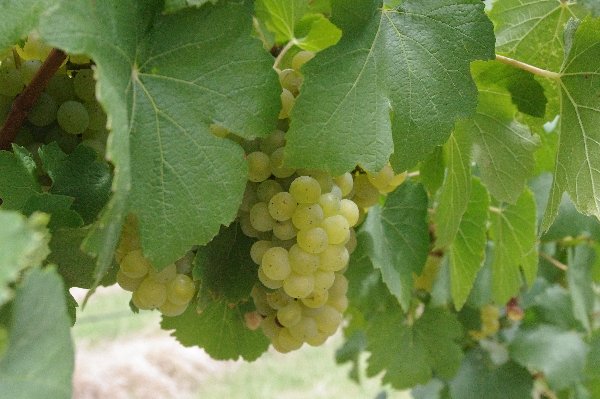
The fruit typically possesses flavours of melon, often with some musk or sweet-sour pineapple, and a floral lift. It is fairly delicate, and yet can absorb a reasonable quantity of oak.

Location

The site lies on an alluvial plain at approximately 80 m (260 ft) above sea level. The soil comprises a sandy loam. Vineyard row orientation is north-west to south-east.

Vintage

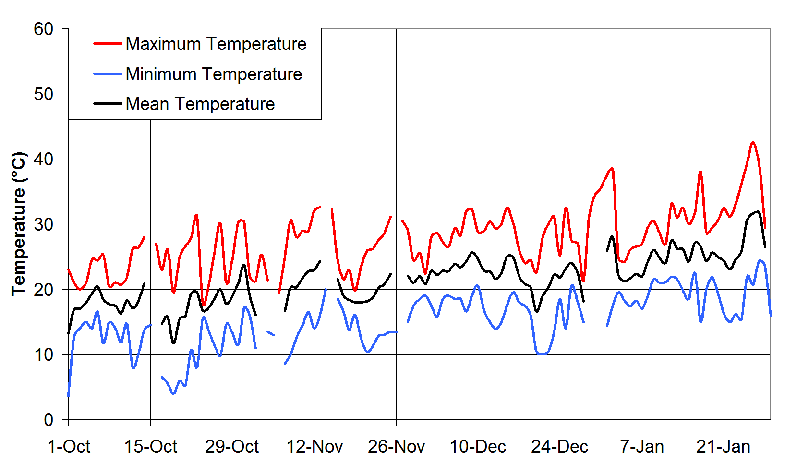
The 2011 vintage began with a wet late spring (rainfall during the months of October and November were each above the historic mean). Fortunately, early summer proved drier than average, with rainfall in the two months preceding harvest (December and January) below the historic mean. The risk of rot was therefore not an issue for this vintage.


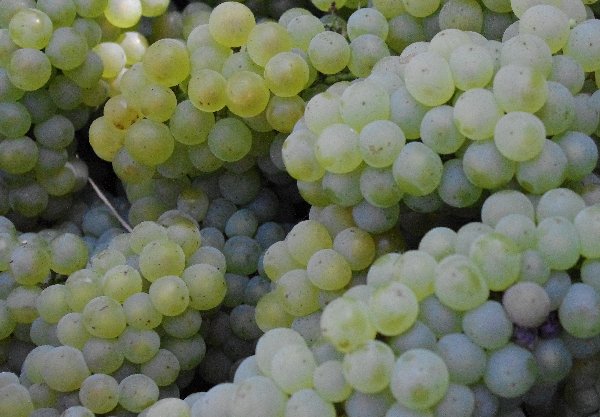
Fruit was hand harvested on 29 January 2011 in warm (mid- 20's°C; 70's°F), dry, overcast conditions. At that point the growing season had accumulated approximately 1400 (°C) degree days (from 1 October 2010 with a 10°C cut-off).

During transport from the vineyard, the fruit experienced temperatures in the early 20's°C (roughly 68°F to 85°F). (This is warmer than ideal, but I do not feel it was deleterious.)

Oenology

Aims

Due to the warmth of the Hunter Valley, the Chardonnay grown in the region does not tend to develop phenolic (flavour and tannin) ripeness until relatively higher sugar levels. I choose to harvest when the flavours are no riper than the stage marked by melon (and a touch of pineapple), because I find that:
  • the flavour intensity isn't sufficient in that vineyard's fruit to support the greater palate weight that results from final alcohols above 12.5% by volume. I don't want a wine that is too heavy or wide on the palate.
  • some of the subtler aromatic notes (such as the floral quality that vineyard's fruit has) become lost at greater ripeness. As I value these characteristics for their individual character and the complexity they bring, I want them to be present.

  • That fruit can absorb quite some oak, so it is perhaps easier to overdo the oak relative to other Chardonnay fruit; but I don't like to see dominant oak, so I tend to limit the contact. Even though it's not my favourite oak profile, I think "sweeter", vanillin oak is better suited to that fruit because it works well with the subtropical fruit and floral notes. However, I would not always choose to oak the wine.

    My goals in making this wine are therefore to allow the fruit and floral aromas to shine, but with the (potential) support of lees contact. I don't want a wine that is too heavy or wide on the palate, the acidity should not be linear or sharp on the palate, and the oak presence (if any) should be almost imperceptible.

    Pressing

    The fruit was pressed as early as possible after picking (within a few hours in this case). It was whole cluster basket pressed (such that the press cake was around one-thirds the volume of the original loose-packed clusters placed in the basket). Whole cluster pressing at moderate pressure avoids excessive phenolics (bitterness) in the juice and resulting wine. This is particularly important, because basket presses don't extract juice as gently as other methods (e.g., bladder presses). For this reason, I tend to maintain low press pressures and allow significant must settling to reduce vegetal press less.

    Press juice yield was very low in this case, at just under 300 l/tonne fruit (approximately 36 US gallons per 1000 lb fruit).

    The must was not sulphited and was oxidatively handled. Oxidative handling of must permits polyphenolic activity, which may lead to reduced phenolic content, and increased colour stability and flavour delicacy. While varietal character may be significantly reduced by oxidative handling, which may not be desirable in delicately flavoured fruit such as this, the primary intention of oxidative handling here was to reduce phenolic content (since the fruit was of relatively low ripeness level and basket pressed).

    The must was settled for at least 16 hours before being racked off the (vegetal) press lees.

    The final must composition was as follows:
    ~11.5 Baumé / ~20 Brix / SG 1.082
    pH 3.36
    TA 7.5 g/l (as tartaric)

    Fermentation

    Indigenous yeast fermentation began within six days of pressing. The average temperature during fermentation was 22°C (72°F). That is somewhat higher than I prefer to wild-ferment Chardonnay, as I feel that between about 12°C (54°F) and 16°C (61°F) is preferrable for whites in general. Nevertheless, I do not feel that fermentation averaging 22°C (72°F) was detrimental to this wine.

    Fermentation was complete (to full dryness) after aprroximately 14 days - by no means a short fermentation by most modern (temperature controlled) standards.

    Racking and Malolactic

    At the completion of fermentation, the wine was racked off the gross less and inoculated with a single-strain malolactic bacteria culture.

    Malolactic fermentation of Hunter Valley Chardonnay is increasingly rare due to the desire to retain as much of the fruit's acidity as possible. This suits a style of Chardonnay that is tighter and fresher/sharper on the palate. Having experimented with MLF+ and MLF- Broke-Fordwich Chardonnay of varying ripeness, I have come to the conclusion that I prefer MLF+. Typical Broke Chardonnay musts don't tend to contain significant malic acid and the TA's are significantly high. Thus, I feel that MLF tends to encourage superior balance.

    I'd prefer to utilise a multi-strain culture, but there aren't many that are commercially available. However, after winemaking equipment has been exposed to MLB it will host a resident culture that, under the right conditions, may flourish in future (often alongside wild strains, thus leading to a more complex malolactic bacteria mix).

    MLF took two to three weeks to begin in ernest, and an additional three weeks to complete. (I feel comfortable seeing long malo's provided that temperature, wine nutrients, lees contact and MLB strain are all favourable.)

    A week later the wine was racked off its lees. The wine pH was 3.21 and 40 mg/l SO2 was added, providing approximately 0.6 mg/l molecular SO2 after SO2 binding.

    The colour was a green-tinged yellow-gold. The gentle nose showed notes of honeydew melon skin and milky lees. The palate was medium weight, with some roundness, a touch of phenolic-astringency and a fresh finish. Some residual fine lees remained in suspension from MLF.

    Élevage, Fining and Bottling

    Élevage continued at temperatures between 12°C (54°F) and 18°C (64°F), averaging approximately 14°C (57°F).

    After two months, the (test-corrected) free SO2 was 24 mg/l. The wine continued to drop tartrates during this time. It showed characters of melon, canned sour pineapple and peach, and some leafy-earth character at this point. The acidity was zesty-fresh and the mouthfeel slightly chalky.

    Fining trials were conducted with isinglass. An addition of 50 mg/l was assessed to result in a silkier palate with a more fluid transition between the back palate and the finish, and reduced astringency/chalky mouthfeel.

    The wine was racked of its lees one week later. Three weeks later the wine was fined with skim milk at a dosage of 7 ml/l. This successfully removed slight phenolic bitterness in the back palate, further refining the palate. Two weeks later the wine racked off the compact fining lees.

    Having experimented extensively with different fining agents (gelatin, isinglass, silia gel, casein/milk) with this Chardonnay fruit in the past, I have found the skim milk fining to be most beneficial in refining the palate texture and phenolic character.

    Some time later the wine was cold stabilised at an average temperature of 5°C (41°F) for approximately one week. The wine was then bottled with an addition of 10 mg/l SO2.

    Final analysis

    After two months in bottle, (best) served at approximately 17°C (36°F):

    Colour: Pale lemon colour.
    Nose: Melon, underripe pineapple, both dried and fresh white flowers.
    Palate: Rounded, with refreshing acidity that provides delineation to the palate.


    Alc/Vol: ~11.5%
    pH: 3.11
    TA: 5.2 g/l (as tartaric)
    Residual sugar: < 2.5 g/l


    Conclusions

    The wine successfully achieved the original goals:
  • The fruit profile is not too ripe, allowing the floral aspects of the fruit to show.
  • Indigenous alcoholic fermentation at warm temperatures encouraged the presence of a slightly wild expression, enhancing complexity
  • Full malolactic fermentation and cold stabilisation provided a somewhat rounder palate, yet with ample acidity to maintain freshness
  • Oxidative must handling (without excessive exposure such as oxygen sparging) may have reduced phenolic content without sacrificing delicate fruit flavour
  • Fining improved palate texture significantly
  • The wine was not oaked to provide a purer expression of the gentle fruit flavours of the vintage.


  • www.brsquared.org/wine