Martin Lersch (of Khymos blog) set up a blogging event called They Go Really Well Together (TGRWT). TGRWT explores experimentation with ingredient pairings based on odorant chemistry, the idea being that certain aromatic chemicals work in synergy. (Martin has a fantastic blog dedicated largely to the concepts of molecular gastronomy.)
The second round of TGRWT was held in June 2007 and featured banana and parsley.
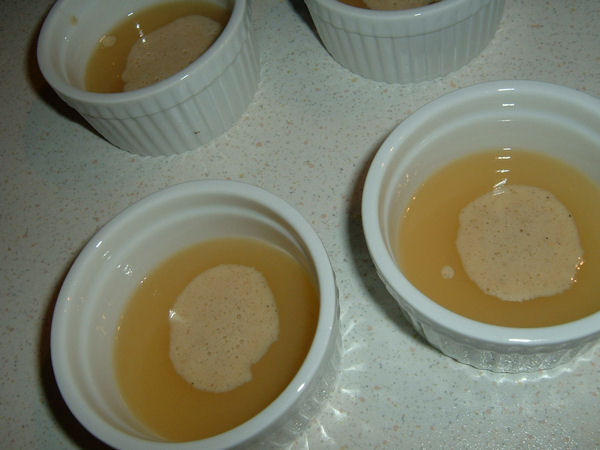
Mojitos are one of my favourite cocktails and I decided to work around that concept. I made banana sorbet with a parsley rum syrup. The jus contains bicarbonate of soda to mirror the effect of the tonic water normally found in a mojito.
The (TGRWT#2 Round-Up was hosted by Tara of Should You Eat That?)
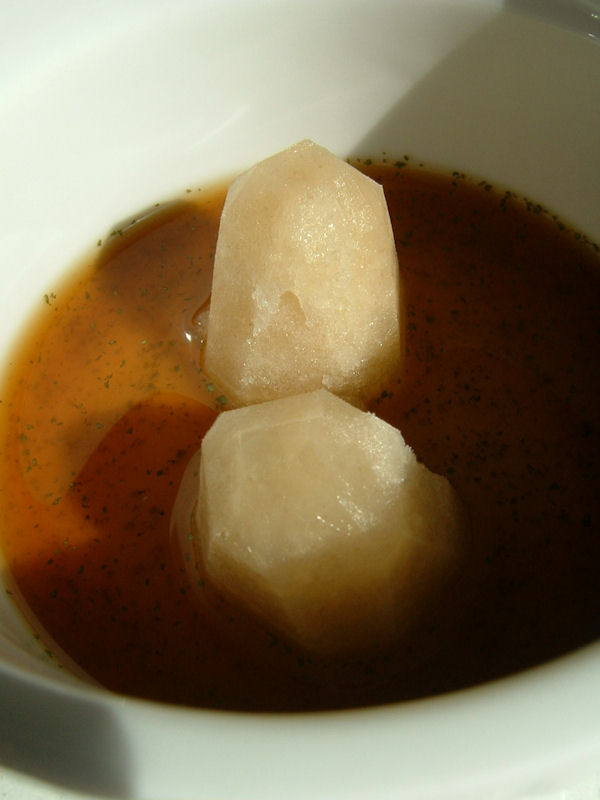
Banana sorbet, parsley rum jus
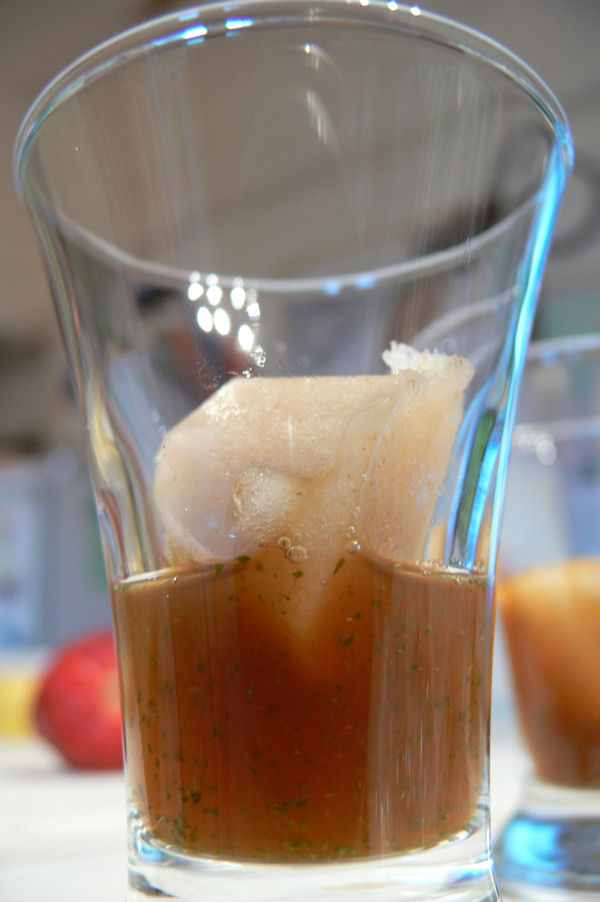
Banana sorbet, parsley rum syrup
Technicals:
This is 100% Jersey and Guernsey cows milk at 5.2% fat.
Mesophilic starter and Flora Danica (I feel that having both provides greater complexity).
CaCl added.
Ripened 1.5 hrs @ 31°C/88°F.
Vege rennet @ 0.5 ml/l.
Time to clean break: 1 hr
Cut, rested, cut over a 45 min period.
Moulded, turned hourly for five turns.
Salted @ 24 g/kg.
Yield: 264 g/l milk.
P. Candidum and G. Candidum sprayed (again, I think having both is worthwhile).
Maintain @ 95% RH and between 5 and 10°C/ 41 and 50°F.
Turned after 10 days.
Wrapped after a further week.
Beautifully ripe after a further 5 weeks.
A bit too salty for me: in future try salting at 20 g/kg?
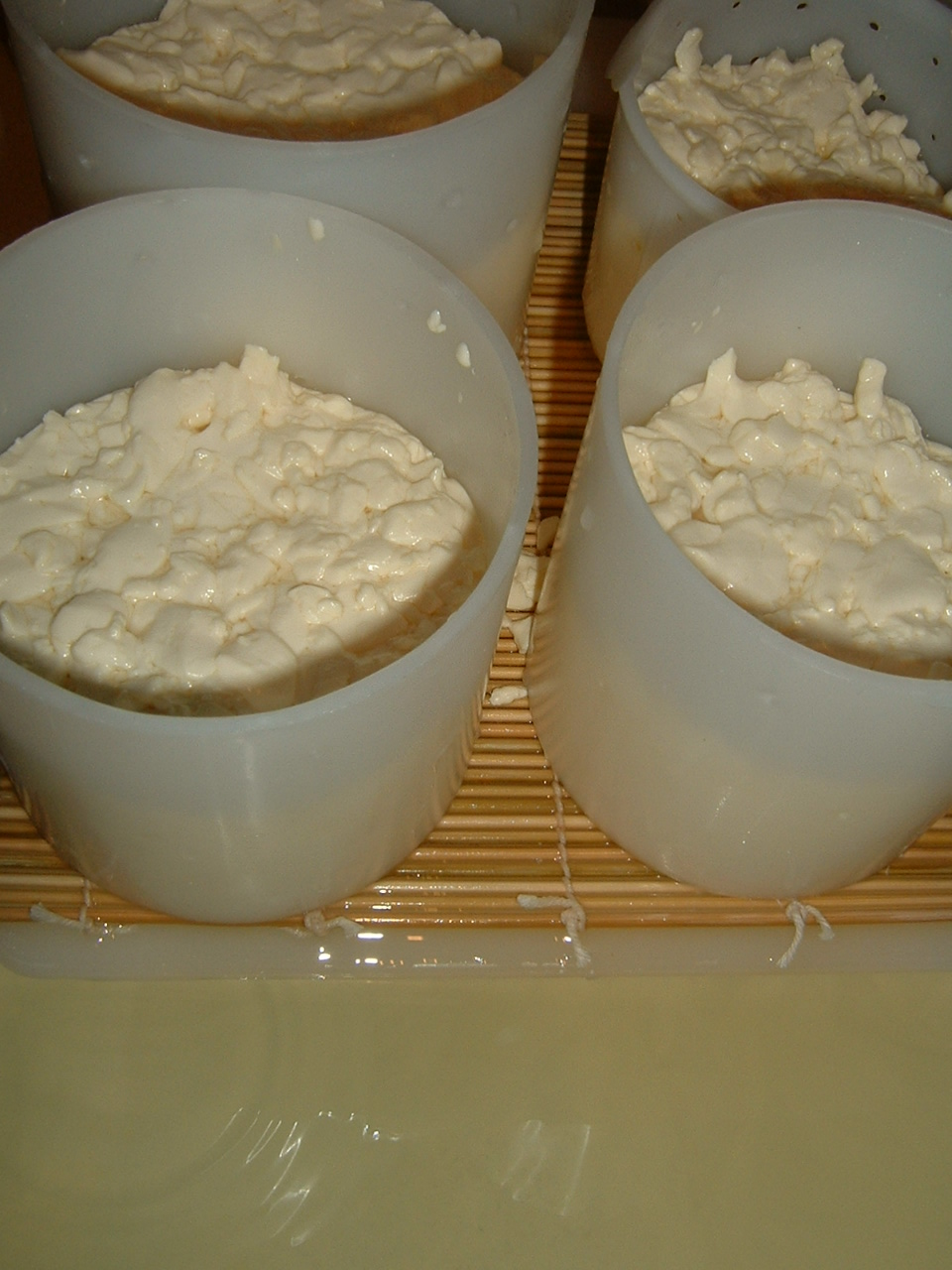
Draining in the moulds
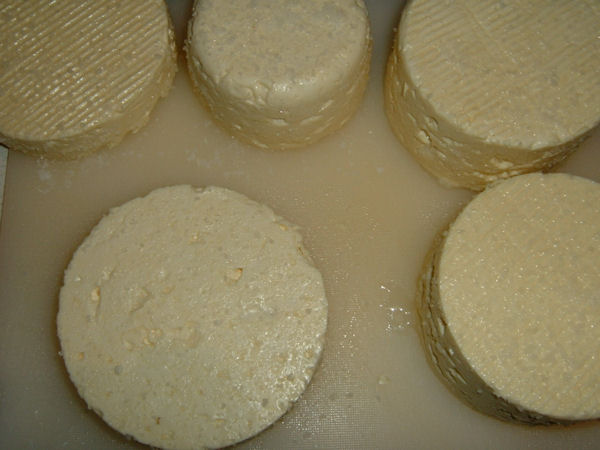
Turned out and salted
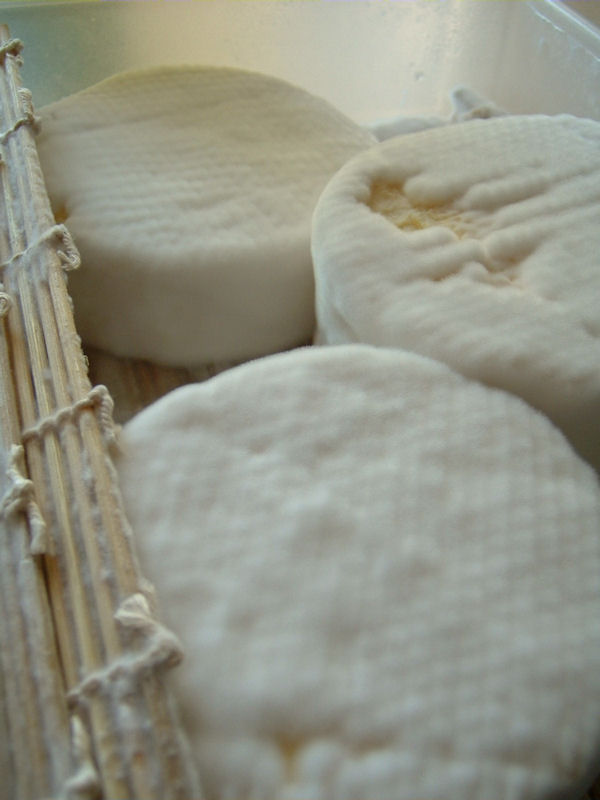
Almost fully covered in mould
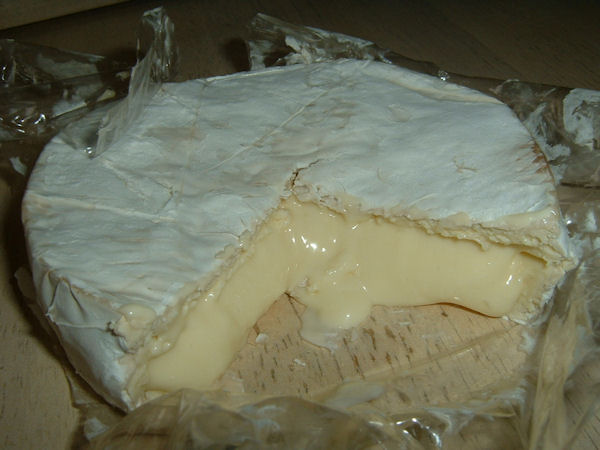
Fully ripe
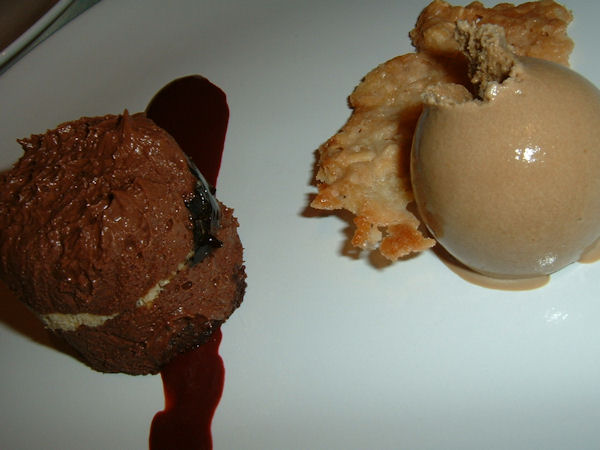
I like the idea of presenting multiple desserts to the diner on one plate, especially for wine matching menus (for which this was designed).
This dessert is designed to be eaten “left to right” and combines a few things I’d worked on from scratch.
I thought, why not a pure nut sorbet? Hazelnut is a classic dessert nut for me, so I went with that. This is made with roasted hazelnuts that are simply blended, strained (through muslin), and then made the usual way (with sugar added to the magic 37%).
I was exploring icecream flavours and thought about using herbs and what might work with vanilla. The lavender and vanilla combo is something I’m very pleased with (almost proud of). The funny thing is no-one has yet been able to guess what the flavour is (even seasoned herb lovers). I loved poached fruits (these are poached in a wine and lemon syrup), and the butterscotch brittle (dusted with hazelnut pieces) adds some texture.
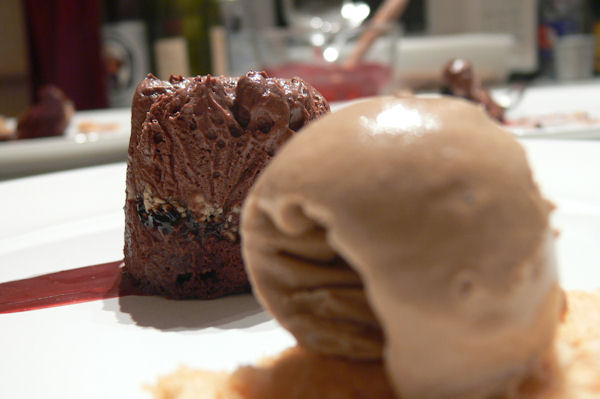
The chocolate “snail” is a white chocolate truffle sitting on top of a dark chocolate truffle, with a sweet espresso coffee reduction.
I was very pleased with this creation.
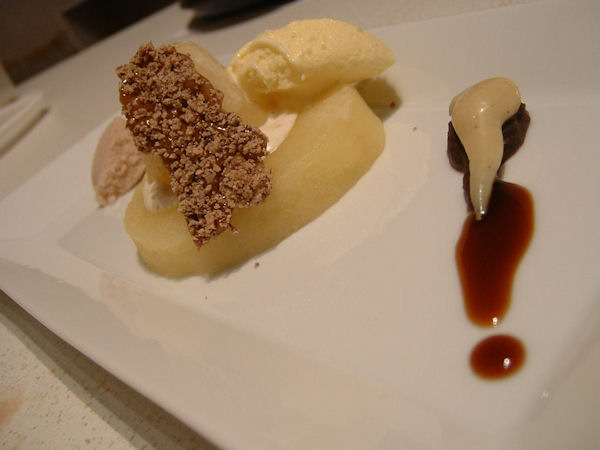
- “Left to Right”: Hazelnut sorbet; Poached apple and pear, lavender & vanilla icecream, butterscotch brittle; chocolate ‘snail’, coffee sauce
Vegetarian cuisine suffers from the bias of many. Aside from pro-meat-snobbery, this is perhaps due to the history of dull over-cooked vegetarian “health food” style dishes and a focus on meat imitation. The challenge is that so many classic dishes use animal products in some way (from stock to gelatine), and many haute cuisine dishes have protein as the central focus.
Knowing a game-themed food and wine matching dinner was upcoming, but would have a vegetarian attendee, I set about trying to create something a little different for that guest. I set a challenge for myself: not just to create a novel ovo-lacto vege dish, but a novel vegan dish where, in true haute cuisine tradition, the focal point of the dish (it was a main) had to be protein.
I think soy protein, when prepared and executed well, is fantastic (e.g., deep fried tofu in a Thai curry). I started off using moulded soy protein (as in the pic) but moved on to tofu in the end because it offered better presentation options. The tofu/soy protein was dehyrated (to draw out the relatively flavourless liquid) before being infused (to replace to with a flavoursome liquid) in a soy/rice wine/Chinese 5 spice marinade. This was then seared.
For accompaniments I took a fusion approach. Red capsicum (bell peppers) were grilled, skins removed, and blended with a light miso. The humous comprised roast cashews, olive oil and a little garlic. The spätzle were made in the traditional way, but with hoisin sauce added, and then roasted to give a crisp texture (a bit like a Soy King crisp).
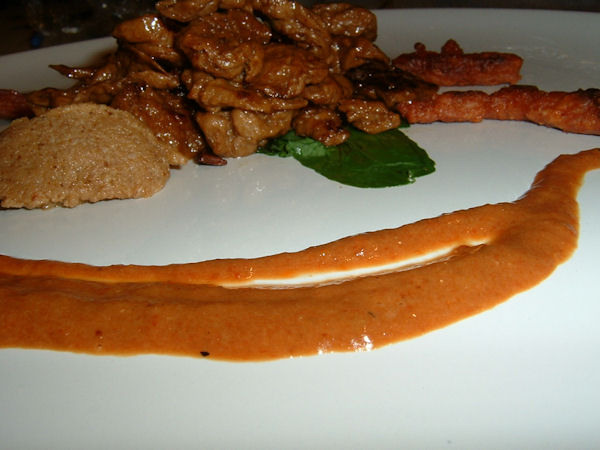
Pan seared spiced soy protein, red pepper miso, roast cashew ‘humous’, hoisin spätzle
If you haven’t tried cooking beef at low temperatures, you should.
Calpains denature at about 40°C/105°F and cathepsins at about 50°C/122°F. Slow cooking for extended periods below these temperatures gets the enzymes working breaking down the muscle tissue to give tender meat.
At about 50°C/122°F (“rare”) the protein myosin begins to coagulate, which solidifies the meat and forces moisture out.
At about 60°C/140°F (“medium”), collagen shrinks and the meat gets firmer and more moisture is pushed out.
At about 70°C/160°F (“well done”), the collagen begins to dissolve into gelatine. It takes a while for all the collagen to dissolve at this temperature (and up to 82°C/180°F), but eventually it will result in drier and tougher meat.
By cooking beef below 50°C/122°F for an extended period of time, it’s possible to achieve excellent flavour and tenderness. (Cook only the outside of the meat to kill of bacteria before doing this – a blow torch is best.)
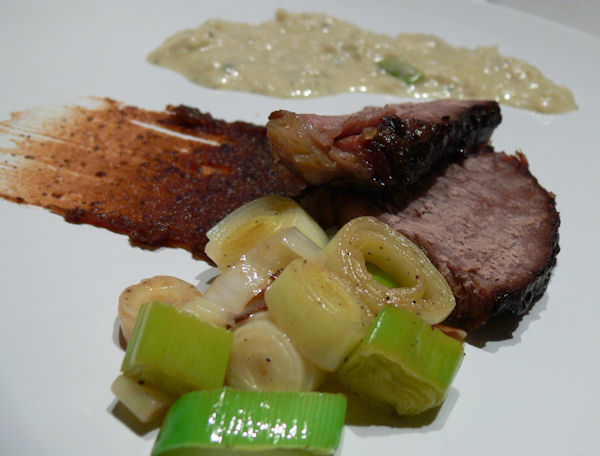
The rib eye below did go a little over 50°C/122°F, but it took a while to get there. Many home ovens can’t maintain these low temperatures – a water bath is a better option. Paired with some onion relish below, it was still moist, with a tender texture and good flavour.
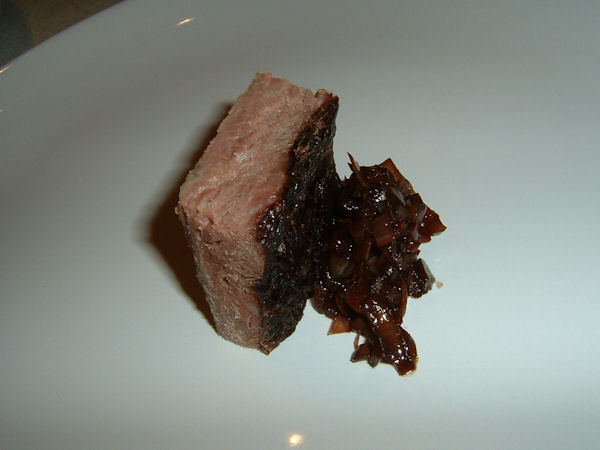
Slow cooked beef
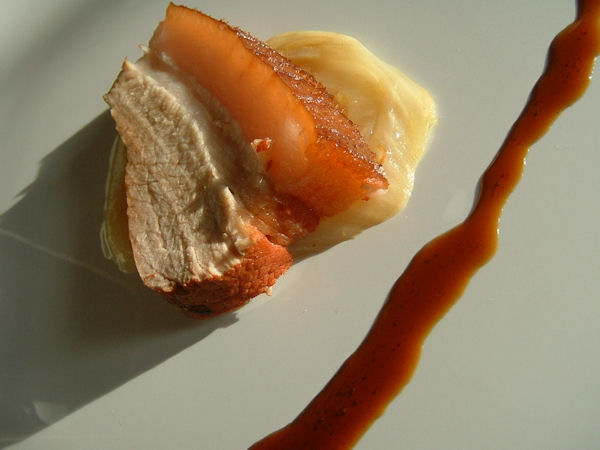
A John Campbell dish by design, that slow roasts pork loin to a perfect 64°C/147°F and pairs it with a creamy wholegrain mustard cannellini bean sauce, pickled braised fennel and red wine jus.
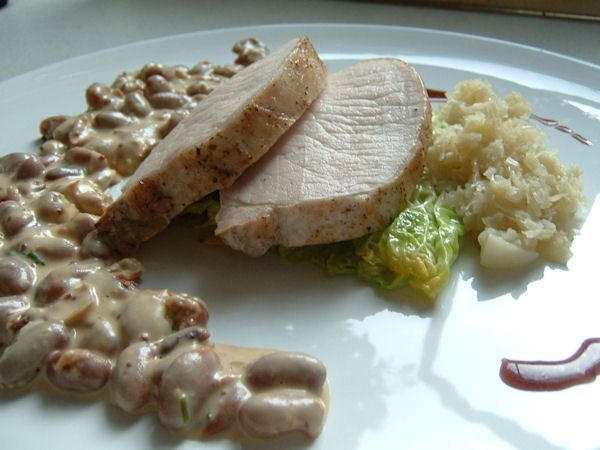
Pork loin, white beans, mustard, pickled fennel
My version involves garlic-sauted prawn, rocket, spring onion, cucumber, coriander (cilantro) and a dressing of olive oil, soy sauce, maybe a touch of fish sauce, lime juice and sweet chili sauce.
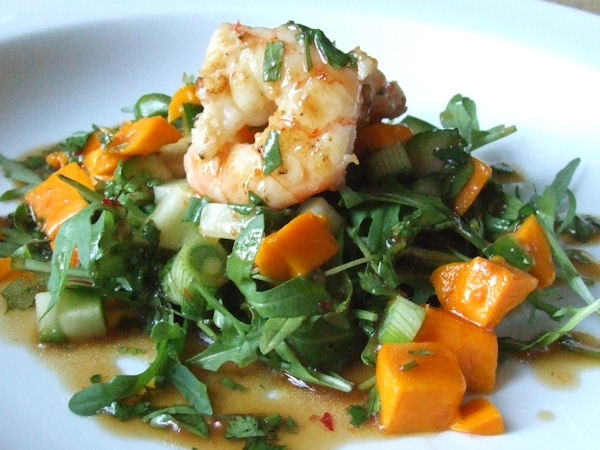
Prawn and mango salad
Thomas Keller thought to whip cheese. It works well, except (as you can see from the photo below) you need more torque than an immersion blender offers to be able to whip Brie properly! (I burnt out one blender just whipping the batch shown below.)
It’s hard to improve on cheese and toast – especially aerated cheese and oily salty browned toast (how I like it). The greens add some pleasant vegetal bitterness, the Balsamic a nice acidic bite, and the Australian pepperberry a spicy touch.
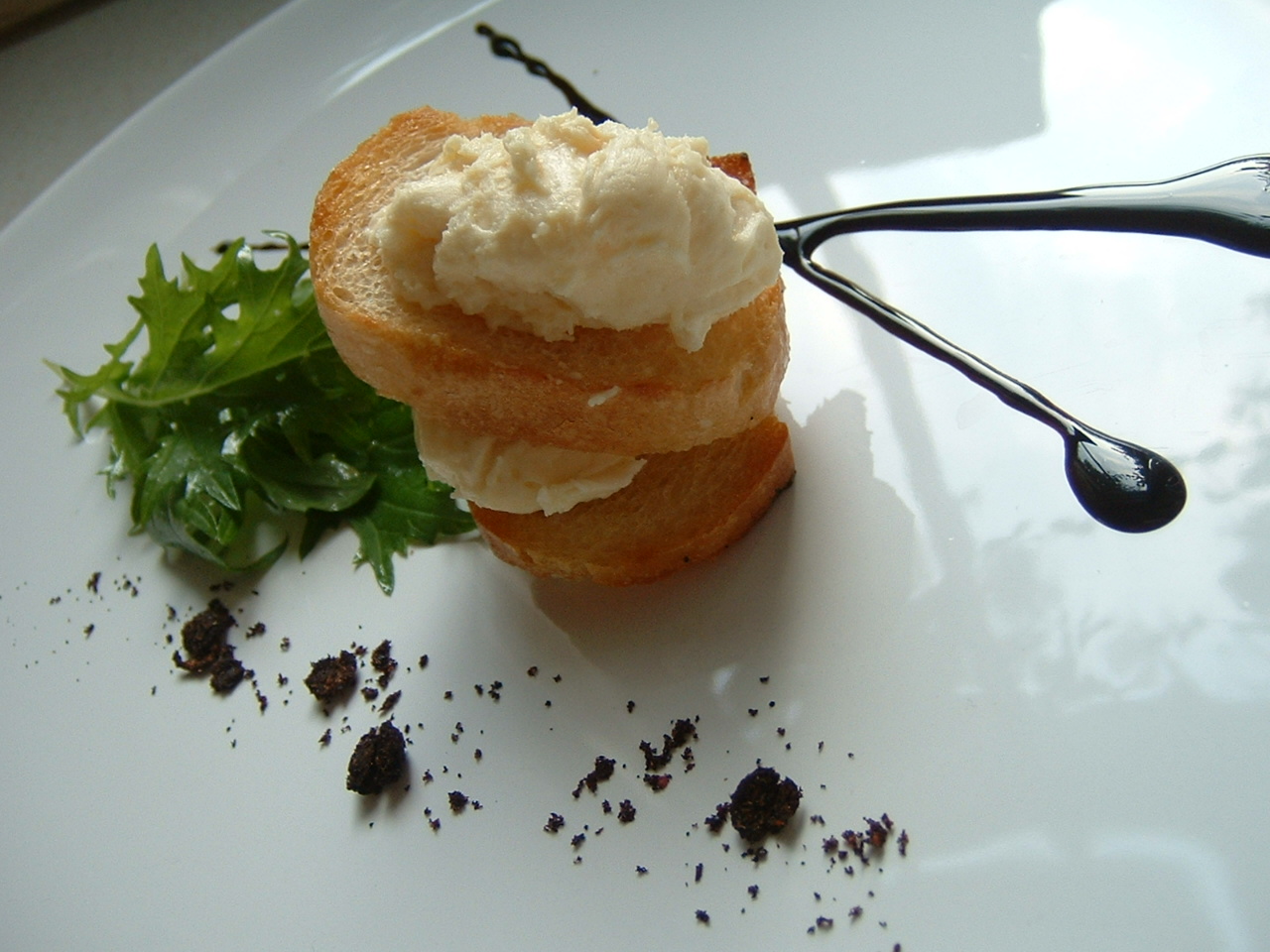
Whipped Brie, French Baguette croutons, greens, Balsamic glaze, Australian pepperberry
On the odd midnight, back in the glory days, making chocolate truffles or salted caramel fudge or perfecting toffee texture and flavour… was almost de rigueur.

Choc truffle and espresso