May Dishes

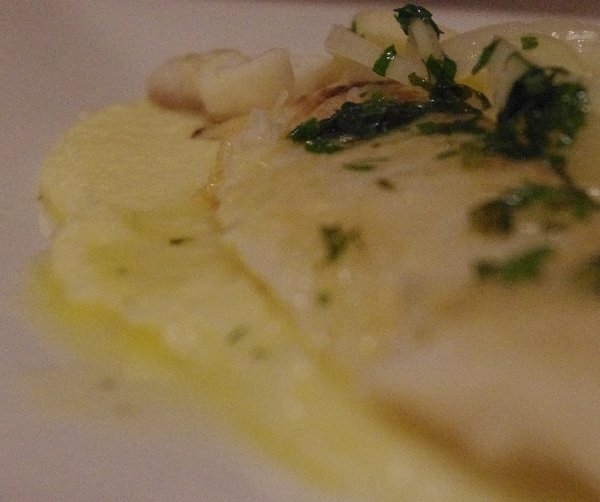
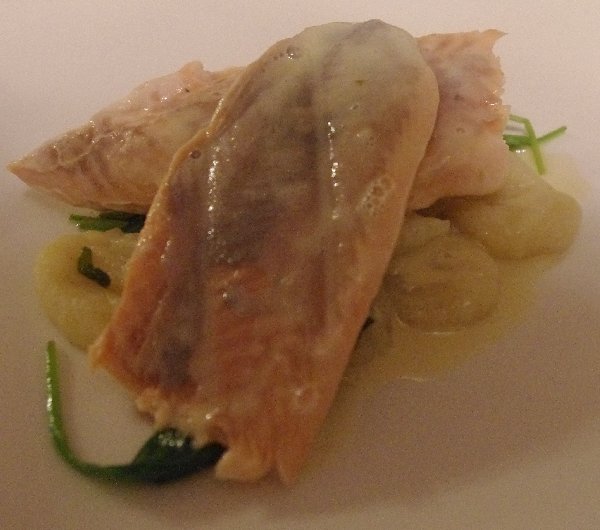
Rainbow trout, gnocchi, wilted baby spinach, roast garlic cream

Rainbow trout: baked en papillote with a little white wine, a treatment most suitable to trout IMO.
Roast garlic cream: fish stock, roast garlic, cream.

A simple but delicious combination, and paired well with the Tapanappa Tiers Chardonnay 2005. It is a good wine, even if perhaps a little pricey, with lifted fruit – honeydew melon skin, baked lemon, and a hint of pink grapefruit and musky-wood. The palate is well balanced, showing acidity that doesn’t dominate, with suitable medium weight, and a reasonably long finish of butter, cream and a kind of nut kernel character. The oak is well pitched, being noticeable yet well integrated.
This isn’t a modern styled Aussie Chard – it isn’t high in acidity, insipid in character, or oak dominant – but rather more like a combination of the old and the new style that meet in the middle ground that I think is most suitable for Aussie Chard: fruit that’s edging on tropical but not pushed too far that way, present acidity that’s not too sharp (and full malo/MLF), some pleasant malo- and sur lie-derived character, and obvious yet well integrated oak. It’s actually one of the best Aussie Chard’s I’ve had for quite a while.
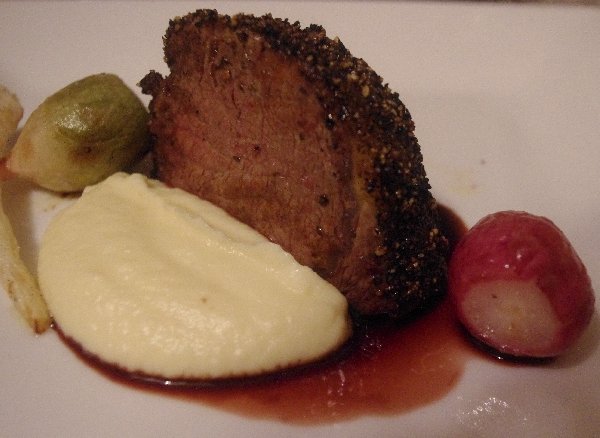
Peppered beef ribeye (Scotch fillet), roast radish, parsnip cream, jus

Beef: What to do with flavourless Australian ribeye (called Scotch fillet in Australia and New Zealand)? Pepper the flavour into it. Finished in the oven.
Radish: European radish and (freshly plucked from the ground) daikon/Japanese radish, roasted in a little butter and olive oil. The European radishes paired better than the daikon… perhaps unsurprisingly.
The parsnip cream offered a nice sweet and cooling contrast to the heat of the pepper and the radish.
Posted in Beef, Fish, Parsnip, Radish, Spinach, Uncategorized | Leave a comment

Easter Menu 2012

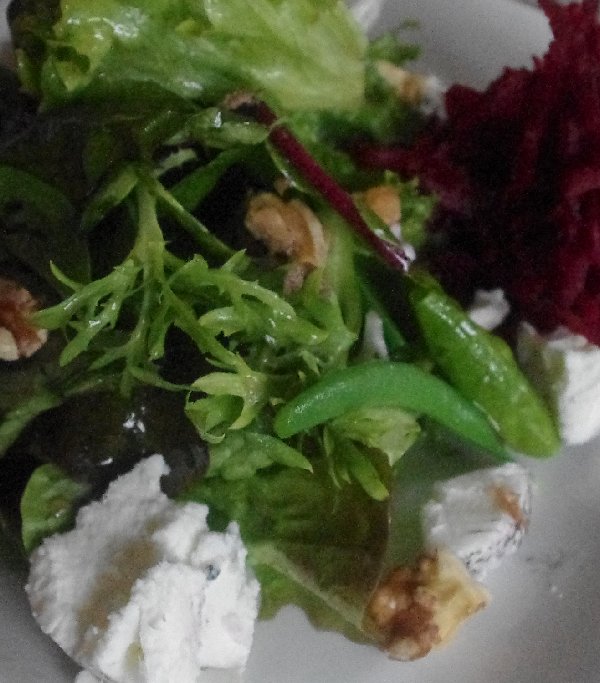
Salad of greens, fresh beetroot, green beans, walnuts, goat cheese

Salad of greens, fresh beetroot, green beans, walnuts, goat cheese


Discussions with others following the prep for this dish led me to realise just how time consuming the preparation of a properly exectured salad can be. And how typically underrated the skill in preparing salad is. Get the dressing balance off, and it shows. Use anything less than absolutely fresh ingredients and the discerning diner notices. Combine ingredients that don’t compliment each other and it weakens the entire dish. You get away with a lot less when it comes to salads. Could it be that the reason salads remain so underappreciated is because they’re often not well conceived or executed? When I list some of the best dishes I’ve eaten in France, that list invariably includes a salad… they just do salads well in France.

The dressing here was a light extra virgin olive oil and raspberry vinegar with a little salt. Diners never seem to be able to pick out the fruit in fruit vinegars; they add an elusive quality to a salad, and often a touch of welcome sweetness.

The salad was served with Christian Moreau‘s Vaudesir Chablis from 2009. The floral-vanilla oak increasingly overpowered the wine’s minerality, fruit (lemon, pineapple and nectarine/white peach), and attrative edge of vegetation, but it remained delicious, with its suitably austere yet balanced palate and long finish. It complimented the salad quite well. Interesting to note too, that a mouthful of greens+walnut+cheese prior to a sip of that Chablis was a far superior experience than if it followed a mouthful of salad that didn’t include walnut+cheese.

Braised pork belly, cauliflower cream, PX prunes, orange zest

Braised pork belly, cauliflower cream, PX prunes, orange zest


Peter Gilmore (Quay restaurant, Sydney) vac-steams a suckling pig, picks it apart, and remoulds within a piece of crispy pig skin. It’s then served with the cauliflower cream and Pedro Ximénez prunes, and it’s a great dish.
The above dish departs in two significant ways:
(1) The pork here is a ribbed belly cut. For pork belly dishes, I actually prefer cut from the top of the shoulder (à la British belly) or from the hind portion of the belly (no ribs). But the ribbed belly cut (with a firmer texture and less fat) offers something different, and greater textural contrast to the soft cauliflower cream and prunes.
(2) Peter Gilmore doesn’t make the simple addition of orange zest, which is my most humble contribution, but I must say that the addition elevates this dish to a whole new level; providing an aromatic lift that cuts through the pork (in the same way that the acidity of a traditional fruit accompaniment like apple might, yet without the acidity – which isn’t needed here because there’s little fat in the pork) and compliments the cauliflower and prunes well. It’s not entirely surprising, since orange is a classic flavour combination with pork, but the fact that it’s the zest offers something different – I don’t know why citrus zests aren’t used more!

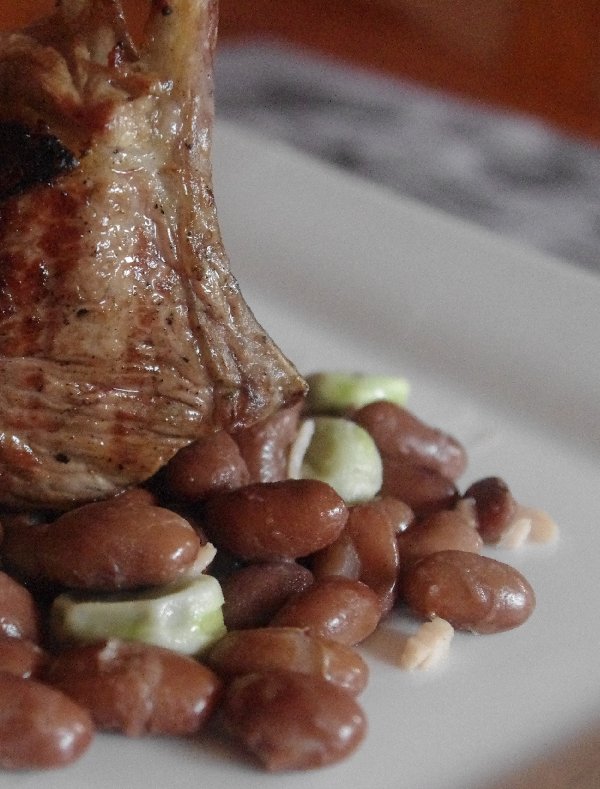
BBQed lamb loin with beans

BBQed lamb loin with beans


In the absence of haricot, cannellini… and broad beans with the shell on (the horror), with a bacon and rosemary-flavoured stock, and mint oil.
The smooth, sweet cherry-fruited E. Pira Barbera d’Alba Superiore 2009 wasn’t a bad match, though it might have been a better match had it not been canvassed in oak.

Chocolate semifreddo

White and dark chocolate semifreddo, PX raisins, hazelnut vanilla fudge


Easter must include chocolate so…
The presentation clearly still needs work, but this was another rendition of the chocolate semifreddo (1 and 2). Here, dark chocolate semifreddo sits on white chocolate semifreddo. Between them lies a hazelnut vanilla fudge. Inside the dark chocolate semifreddo hide PX soaked raisins.

Visual recipes for the adept?


I don’t use recipes, except “in the pastry section”. Even then, I suppose I don’t use recipes as such: I just want to be reminded of the quantities, and a general guide for execution sequence, that I can quickly jot down, take to the kitchen, and follow with visual ease (without reading reams of text). Thus was born the visual “recipe”. Of course, it doesn’t include much of the detail (for example, folding the chocolate and pseudo-pâte à bombe mixture into the cream wouldn’t be done until it was cold, to retain the air in the emulsion), but it contains the essential information. Above is a “visual recipe” for the dark chocolate semifreddo in isolation.

Posted in Beans, Beetroot, Cauliflower, Cheese, Chocolate, Dessert, Fruit, Greens, Lamb, Lettuce, Menu, Nuts, Pork, Uncategorized | Leave a comment

March Menu 2012

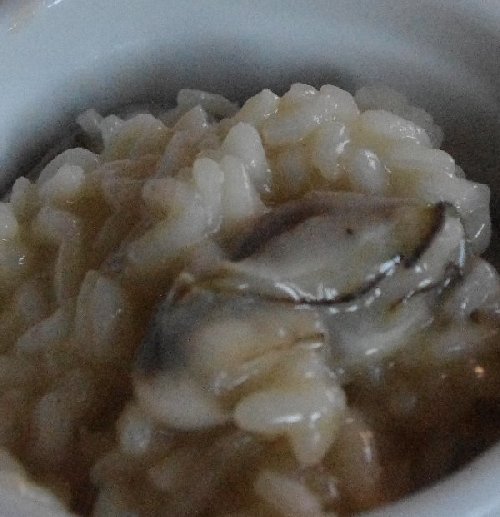
Oyster risotto

Oyster risotto

I was trying to think of a starter that was reasonably filling and could accompany Chablis… Arborio rice (naturally) stirred endlessly while vegetable and shellfish stocks and white wine are continually added and reduced. Then, for the last few tens of seconds, along with the traditional addition of butter, oysters are also added and semi-poached. The resulting texture was better than hoped for: creamy risotto rice with a central bite and appropriately rounded stock-base flavours, with occassion hits of creamy rock-pool oyster flavour.

The Chablis in question was the Seguinot-Bordet Vaudesir 2009. A rather ripe nosed (nectarine and next to no minerality) wine, though the palate combined a delicious tingling acidity on entry with a round (yet in no way fat) texture and a long river pebble-mineral finish. It worked well with the oyster risotto. Interestingly, the particular Arborio used here was quite aromatically “grainy” (smelling like raw wheat grain), which worked surprisingly well with the Chablis as a flavour contrast.

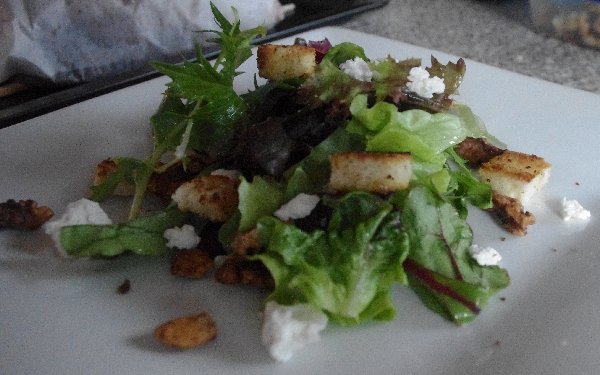
Salad of greens, young goat cheese, crutons and walnuts

Greens, goat cheese, crutons, walnuts

A simple, light and delicious salad with a very light dressing of about 20/80 grapeseed oil/sushi vinegar.

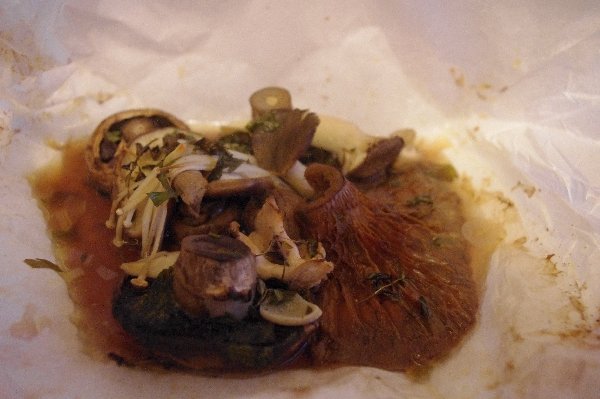
Mushrooms en papillote

Mushrooms en papillote

Surprises are a nice experience for the diner and are perhaps too often reserved for desserts. Here, the diner is presented with a warm paper package where, upon opening, they are greeted with a waft of earthy baked mushroom, herb and vinous aromas. A very simple yet immensely satisfying dish showcasing a variety of mushrooms, baked en papillote with butter, white wine, parsley, thyme, marjoram, and a touch of pepper.

Pierre Amiot‘s Morey St Denis is particularly good for village-level red Burgundy. The 2009 was showing wild raspberry and cherry aromas along with a floral aspect (like pink dog rose) without being volatile in any way. It was like the summer’s bounty of fruit in Northern Europe, with a touch of tree fungus/meat/and ultra-subtle wood. The palate was beautifully textured (damusc-velvet was mentioned), with a sweet-sour cherry flavour that sweetened a little in the finish. With the mushrooms en papillote, this was a complimentary match that was more about textural companionship than elevation or contrast of flavour. The wine also worked reasonably well with the following dish.

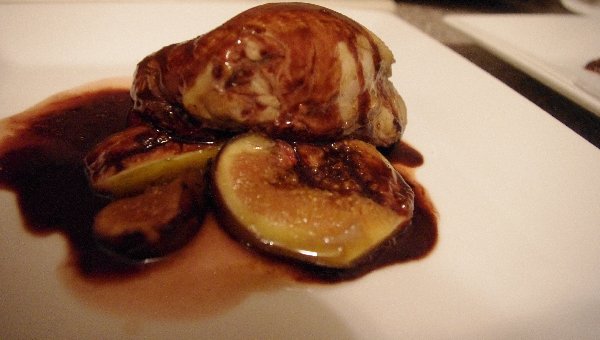
Roast quail and figs, jus

Roast quail and figs, jus

Figs and quail roasted en papillote to retain moisture, with a little red wine and dry Sherry. Red wine and quail stock jus.

Quail stock

And a quality (unusually meat-heavy flavoured) stock makes all the difference.

Strawberry and white chocolate mousse

Strawberry and white chocolate mousse

A layered mousse, with the white chocolate component being whipped cream folded into a (low temperature) pâte à bombe that has had white chocolate melted into it. The strawberry component is whipped cream folded into a mixture of whipped egg white and sugar, and gelatin-set fresh strawberry juice. The twist is that the cream used for the strawberry component has been infused with both rose water and (to add complexity) actual rose petals – but subtley so, such that the diner cannot quite detect the addition element and it adds a degree of intrigue. I was quite pleased with the concept.

The candles burned late into the night…

Posted in Cheese, Chocolate, Dessert, Fig, Lettuce, Menu, Mushroom, Nuts, Rice, Shellfish, Uncategorized | Leave a comment

Lamb and more lamb, herbal sorbet

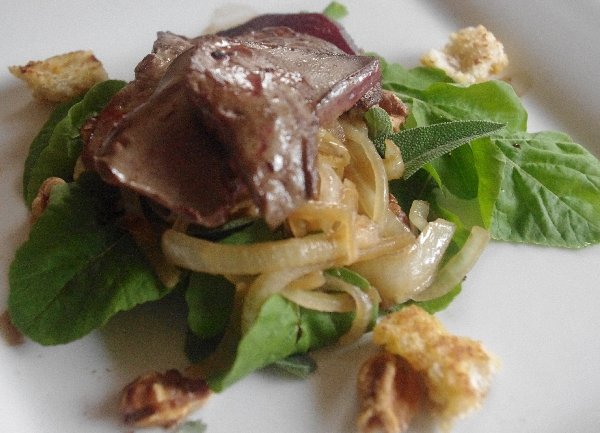
Salad of lamb’s liver, rocket, quince, onion, rocket, crutons, walnuts

Fried lamb liver, poached quince, rocket, sage, onion, walnuts, crutons, balsamic


Lamb’s liver: flash fried.
Quince: poached in red wine and cinnamon.
Onion: slow fried with Sherry.
Crutons: fried with mustard and cider vinegar.
Plus rocket, sage leaves, roasted walnuts, and balsamic vinegar.

Just a slight divergence from the classic combinations, and they all worked well together.

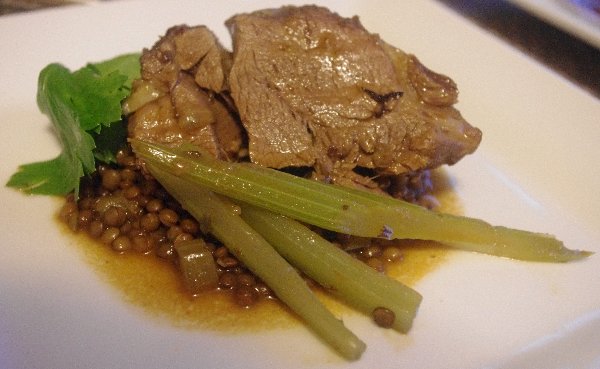
Braised lamb shoulder with puy lentils and celery

Braised lamb shoulder, puy lentils, celery, reduced braising sauce

Lamb shoulder and classic aromatics (onion, celery, carrot) fried off before a little tomato passata, duck stock, puy lentils, garlic, bay and thyme were added. Oven-braised at about 170°C (340°F) for a few hours. The braising liquid was then strained off and reduced (in which the celery was par-braised to al dente) with rosemary. Classically delicious. A ceramic casserole dish makes an incredible difference!

The lightness (12.5% abv) of Bernard Baudry’s Chinon Franc de Pied 2003 was perfectly balanced with the lamb shoulder dish, even if the acidity was a little high in pairing the dish for me. The wine was fantastic: integrated red fruits verging on plum, touches of woody leather/polish, good balance with slightly resolved (yet still pleasantly astringent) tannins and a slightly rounded palate.

Strawberry-rhubarb-basil sorbet

Strawberry-rhubarb-basil sorbet

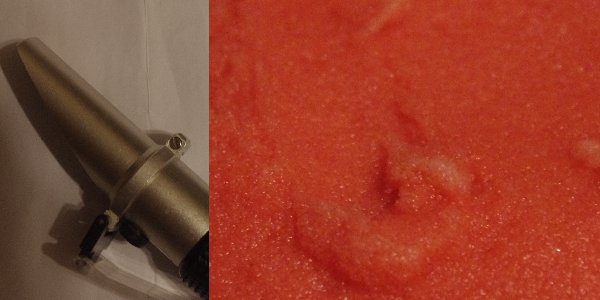
A refractometer can be a lot faster to use than a hydrometer for measuring the sugar concentration of liquids.
I welcomed the suggestion to add basil to the strawberry and rhubarb juice. A small-handful (a few sprigs) of sweet basil was juiced with the fruit, and was more than sufficient (for the 600 ml of juice) to provide a green-herbal edge with just a touch of anise, creating an interesting variation on the strawberry-rhubarb flavour. I’d do this again, though with slightly less basil next time.

Posted in Lamb, Lentils, Lettuce, Nuts, Onion, Quince, Rhubarb, Sorbet, Strawberry, Uncategorized | Tagged | Leave a comment

Classic chocolate

It’s been five years since this rendition, but the theme remains the same because the classic combination of chocolate, nuts, caramel/fudge just works so well. I hold rich desserts (in moderation) under my belt (pun intended ;-) ).

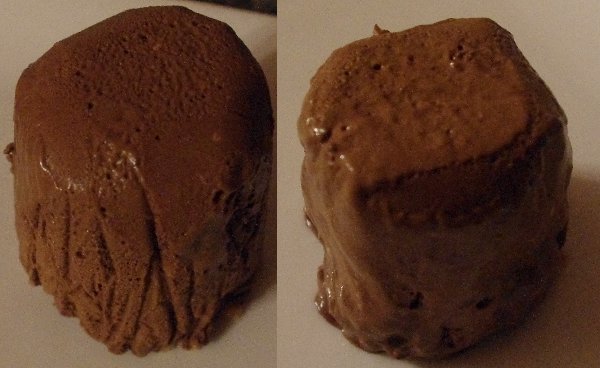
A chocolate semifreddo (though it looks like just a mass of chocolate mousse): semi-frozen dark (70%) chocolate custard with whipped cream (and, here, meringue) . Inside hide* raisins plumped-up with Pedro Ximénez, and underneath sits a layer of hazelnuts (for me, the No. 1 nut with chocolate) set in a vanilla-(cream-)fudge.

Chocolate semifreddo, PX raisins, hazelnuts, vanilla fudge

*The best desserts have an element of surprise.

Posted in Chocolate, Dessert, Nuts, Uncategorized | Leave a comment

Coffee: Sumatran comparative

The Sumatran Kuda Mas Mandheling against the Sumatran Blue Batak Mandheling (both roasted some seconds into second crack).

Each prepared as a double espresso latte.

Kuda Mas - second into 2nd crack


Kuda Mas: a smooth, bold, dark, toffeed animal with some subtropical rainforestfloor. A denser and slightly more complex Sumatran Mandheling.

Blue Batak - second into 2nd crack


Blue Batak: more elegant, smoother, with higher acidity, more fruit, caramelised fruits. A much brighter, more fruity Sumatran Mandheling.

Posted in Coffee, Uncategorized | Leave a comment

Christmas menu

Pheasant and Quail Terrine, beetroot salad, raisin purée

Pheasant and Quail Terrine, beetroot salad, raisin purée

Terrine: pheasant leg and breast, quail breast, chicken livers, prosciutto, seasoning, white wine.
Beetroot salad: grated fresh beetroot, dressing of red wine vinegar, lime juice, soy sauce and honey.
Raisin purée: plumped and puréed, plus verjus.

Paried fairly well with a very youthful, lemony and (unfortunately) only slightly toasty Roederer Brut 2005.

Scallop, baked pumpkin, fried chicken gyoza, green curry foam

Scallop, baked pumpkin, fried chicken gyoza, green curry foam (not shown)

Scallop: seared.
Pumpkin: baked in Sherry, garlic and ginger.
Gyoza: minced chicken, spring onion, garlic, ginger, soy sauce; poached then fried.
Foam (not shown): essentially a Thai green curry sauce that’s heavy on the aromatics (i.e., coconut milk flavoured with shrimp paste, fish sauce, lemon grass, garlic, ginger, galangal and kaffir lime).

I was pleased with this dish concept, and it proved one of the most popular dishes of the day. The flavours are classically complimentary and the dish offers a variety of textures. The gyoza needs to have the sufficient crunch (not executed to perfection here), and it seems lecithin may be foam-challenged when it comes to coconut milk, but otherwise successfully executed.

Condrieu, Burgundy


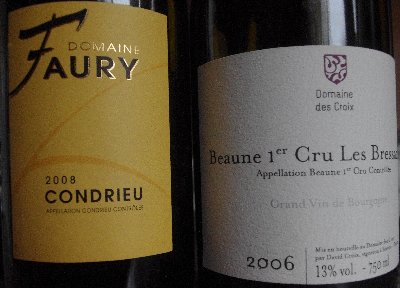
Domaine Faury Condrieu 2008
Classic apricot, peach and florals (violets and wattle seed). It has a slight oiliness without being heavy or gloopy, remains relatively light on the palate, with balanced acidity and an almond kernel finish. Good Condrieu, and quite a good match with the scallop dish.


Prosciutto Mushroom, dill green beans, Bordelaise sauce

Proscuitto mushroom, dill green beans, Bordelaise sauce

Mushroom: slow baked with butter, garlic, thyme and white wine; formed into a cylinder wrapped in prosciutto.
Beans: fresh garden greens, poached and tossed in melted dill butter. (I recommend pairing dill and green beans.)
Bordelaise sauce: veal stock, red wine, shallot, marrow.

Domaine des Croix Beaune 1er Cru Bressandes 2006
Savoury cherry, almond, cherry wood and a little compost on the nose. Not a spectacular nose, but subtle and savoury. Well balanced, with pleasantly soft sandy tannins. Whole and gently expressive even if not impressive. Being neither fruit forward nor funky, and savoury in nature, this actually complimented the dish surprisingly better than many other Pinots might have.

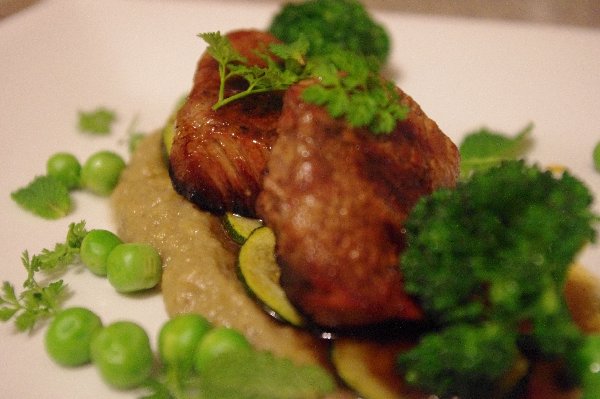
Lamb Medallion, eggplant/aubergine purée, peas, mint, rosemary jus

Lamb Medallion, eggplant/aubergine purée, peas, mint, rosemary jus

Essentially a simplified version of this dish (or this dish). Execution suffered a little here. It’s important to have flavoursome eggplant/aubergine.

Tasmanian ‘Brie’, croutons, poached nectarine

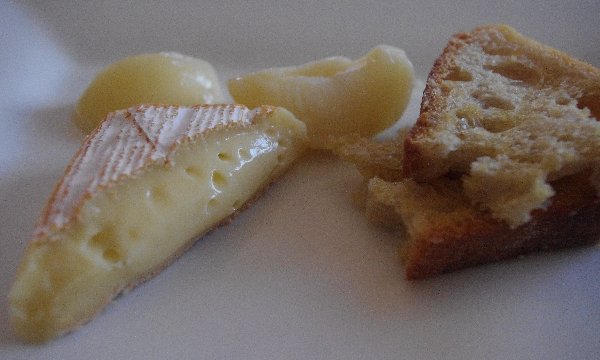
Tasmanian 'Brie', croutons, poached nectarine


MSR Auslese Riesling


Accompanied by Reinhold Haart Wintricher Ohligsberg Riesling Auslese 2007, which was fairly ripe in its aromatics (pineapple, fig and suggestions of musky pink grapefruit), smooth and unctuous without being overly sweet; with the delineation, balance and focus of quality MSR Auslese Riesling. I typically feel the rind of soft cheeses competes with (even sweet) Riesling, but here, accompanied by the fruit (poached in white wine, sugar and lemon juice) and the croutons, it did not clash.

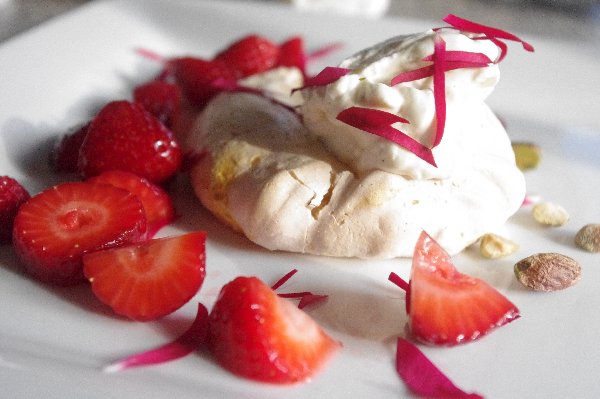
Elizabeth Falkner’s Lovelova: Persian pavlova, saffron meringue, cardamom cream, rose water strawberries

Persian pavlova, saffron meringue, cardamom cream, rose water strawberries, pistachios, rose petals

The saffron didn’t work here (though it’s possible the quality of the saffron was to blame), but otherwise a suitably delicate, light, summery dessert.

Posted in Beans, Beetroot, Cheese, Chicken, Chinese, Dessert, Eggplant, Lamb, Menu, Mushroom, Pheasant, Pumpkin, Scallops, Strawberry, Uncategorized | Leave a comment

Early Spring Menu

Starter

Toasted Lebanese bread, eggplant/aubergine puree, dukkah

The Tapanappa Pinot Noir 2010 from Parawa, Fleurieu Peninsula, South Australia, had a nice nose of very dark cherry, some dry brown leaves, a touch spice (cinnamon-like). I’d like to see more texture on the palate (which was also a higher acid style and a little short) but this has pleasant flavours (with enough interest). Good for the price, and without meaning to damn with faint praise, would present well as a “lunch wine”.
These are eight year old Dijon clone vines that are close-planted (1.5 m by 1.5 m) on a north-facing slope of sandy loam and clay overlying a laterite at 350 m above sea level. Even if this “only” received 1283°C days over the growing season, it still smells like “sweet” ripe fruit – so much for “cool climate” Australia. Looking at the final analysis, the slightly disjointed acidity makes sense: a TA of 5.8 g/l (as tartaric) with a pH of 3.65 is just too much (highly buffered) acid IMO – but perhaps my palate just isn’t Aussie enough? ;-) .

Lamb, Med and spring veg

Lamb, eggplant purée, zucchini, brocollini, peas, jus

Lamb: BBQed eye of rib.
Eggplant/aubergine: baked with soy sauce and tarragon-flavoured white wine vinegar, puréed with a little yoghurt.
Zucchini: sautéed in butter with marjoram.
Brocollini and peas: blanched.
Jus: mire poix-dominant, lamb rack and herb (thyme, bay) reduction.
Chervil and mint.

The brocollini was a little out of place. The lamb/eggplant/zucchini/marjoram/chervil/jus combinations worked very well.

Not a bad combo with a Henschke Cyril Henschke Cabernet Sauvignon 1999 from Eden Valley, South Australia. It’s 70% Cab Sauv, 15% Merlot and 15% Cab Franc and smells of very pure ripe, sweet blackcurrant, polish, a touch of tar and wild spearmint. It is well integrated, even if the acid is verging on the high side, and feels more elegantly structured than many of it’s SA cousins (as the rep goes) even if it does lack length. Easy drinking but not particularly interesting and I still have trouble with the value for money (even at new-release prices).

Cheese

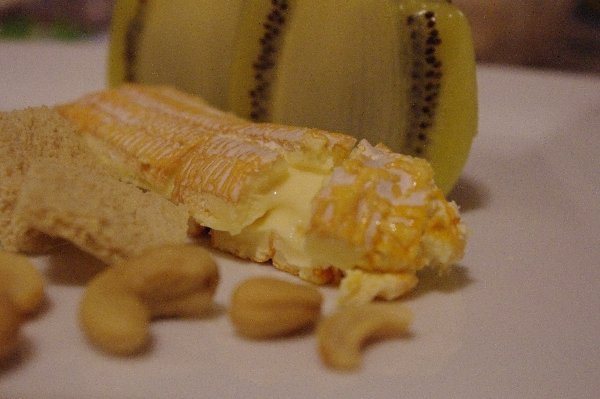
Poached kiwifruit, Tasmanian Heritage Red Square, roasted cashews, kamut croutons

The kiwifruit was poached in white wine, sugar and lemon juice from immediately after the syrup had been taken off the heat. This resulted in the fruit’s flavour being completely altered to something akin to plum or greengauge – not something I’d do again, but interesting.

Citrus sorbet
Orange, mandarin, grapefruit. The madarin adds a background even if its unique flavour is drowned out.

Sulawesi coffee

Sulawesi Toraja roasted into second crack

The 2009 Sulawesi Toraja again (a wet processed bean with screen size 17/18 and grade GR 1), but here roasted a little further into second crack.

I used to like the idea of a heterogeneous roast yielding flavour complexity (because of the broadened flavour spectrum) but now I’m thinking the pro roasters might have more reason than consistency in aiming for a homogeneous roast: the slight burn here bothers me.
Nevertheless, this was very robust in the cup (and therefore great as an after dinner coffee), with masses of dark chocolatey cocoa flavour, almost golden syrup-like dark sugar, and some rainforest floor with a slightly animally note.

Posted in Brocolli, Canapé/Hors d'œuvre, Cheese, Coffee, Dessert, Eggplant, Fruit, Grapefruit, Ingredient, Kiwifruit, Lamb, Menu, Nuts, Pea, Sorbet, Uncategorized, Zucchini | Leave a comment

Seafood and root veg purées

Just playing around with some seafood and root veg.

Scallops, cauliflower purée, Sherry-butter foam

Scallops: pan fried Tasmanian.
Purée: Cauliflower florets poached in milk and cream, then puréed and seasoned (white pepper, sea salt).
Sherry-butter foam: PX and Manzanilla Sherries, chicken stock, butter, a little thyme and lecithin.

It’s hard to beat the classics: scallops and cauliflower. When it comes to haute cuisine prep for cauliflower, a milk-cream purée has got to be amongst the best, if not the best. The foam adds some contrast in flavour, and works surprisingly well (though I have always been a fan of the scallop-Sherry fusion, and I think chicken is the best meat for scallop too).

Sea perch, parsnip purée, leek, parsley-lemon-butter sauce

Sea perch: pan fried Tasmanian. There are so many “sea perch” species on the Australian eastern seaboard that the term is a bit meaningless (like so many other common fish names), but essentially all the commercial species (of the genus Lutjanus) are delicate flavoured firm and flaky, white fleshed saltwater (estuarine) fish with low oil content.
Purée: as above, with parsnip in place of cauliflower.
Leek: blanched.
Sauce: sweated shallot, deglazed with Chardonnay and reduced; butter, parsley and lemon juice.

A combination on a hunch and whim, but it works very well (better than the scallop dish). The sweetness of the parnsip works well with the sauce, the leek flavours blend seamlessly, the lemon gives a little acidity to contrast the purée’s creaminess and sweetness, and all these flavours work with the sea perch. I will have to return to these flavour combos.

A Claude Cazals Champagne Cuvée Vive Grand Cru NV had a very fine bead, gentle aromas of flowers (heather) and chalk, and a lovely, well balanced, silky-textured palate with good progression. It did not clash with the above dishes, but niether the dishes nor the wine raised the sensations of each other. Then again, this Champagne was not so friendly with oysters either, so perhaps something altogether different would be best with it.

Posted in Cauliflower, Fish, Leek, Parsnip, Scallops, Shellfish, Uncategorized | Leave a comment

Aussie BBQing

Perhaps it’s just a result of my childhood, but the smell of burning native Australian woods (like eucalyptus) is transporting. Cherry, oak, mesquite, hickory… they’re all great, but Australian native woods offer something else, unique and distinctive. I find that the flavour influence works particularly well with unadorned meats, but not so well with spiced meats.

Australian native wood BBQing of kofte kebabs

Posted in Lamb, Uncategorized | Leave a comment